Category Archives: Literary

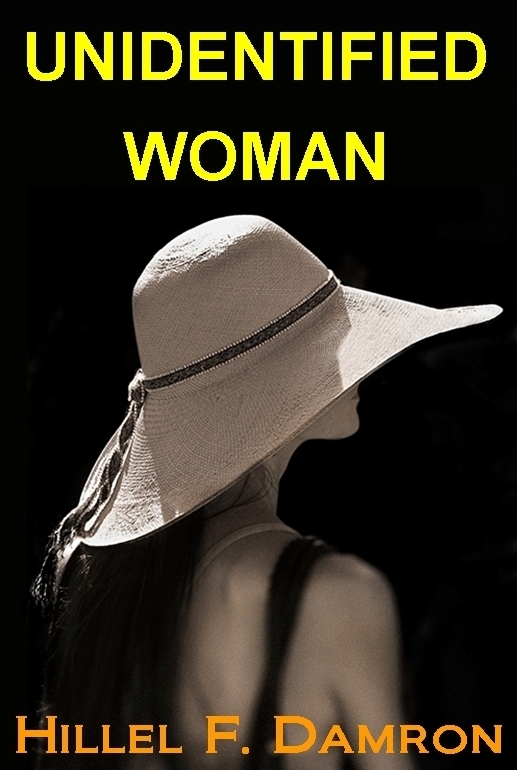
Who’s the “Unidentified Woman?”

This summer, a Beach Book like no other—a story of rape, revenge, and redemption—will be published online, available throughout the Global E-reader Universe (see a short description of the novel by clicking the “WOMAN” page above). Be the first to read an excerpt, and have an initial clue on the road to solving the mystery: who is she, the Unidentified Woman, and what’s her story?      This is Post Two, with a short excerpt:

At the farm, the next day

We arrive at the farm the next morning. I don’t know where we are. All I know is, we drove almost the whole night. They stopped to eat and then slept in the car for maybe an hour or two. I didn’t eat or sleep at all. The man who grabbed me and held me also touched me in my private part. Nobody ever did that to me before. His fat finger went in there and hurt me so bad. They were laughing about it later but I kept crying. 

I’m crying now, too, when he gets out of the car and pulls me out with him. We’re inside this farmhouse, so I can’t see what the outside of it looks like. I don’t want to see it—I want to go back home to my Mami. I promised her in the morning, before leaving the house to school, that I won’t be late. More than anything else in this world I now want to help her in the kitchen and learn how to sew. But how can I explain to her why I’m so late? How can I tell her what this man did to me in the car? She would never believe me, I know her. It’s better for me to die right now.

“We found another girl for you, Big Mamá,” the man who drove the car tells a big fat woman who comes out of the house. She wears baggy pants and sloppy, thick shirt over her mountain belly. Not even a skirt or a dress like the women in my village wear.

“She’s not damaged,” says the ugly man who grabbed me and held me all night, when he hands me over to her. “But she keeps crying all the time like a baby.”

“I want to go home to my Mami,” I say, trying to control my cry.

These are the first words I say since they took me away from my home village. I think, maybe because she is a woman and a Big Mamá, she will understand and send me back home. But her arm, the way she holds me, is even stronger and more hurting than how the man held me.

“I’m your Mami now,” she tells me with a threatening voice, “so stop crying!”

I cry even louder when I hear her saying that. She is not my Mami. She is…

She slaps me. So hard that I see only dark skies and I lose my balance. I fall—but not on the ground. I’m falling and falling into an empty space. I’m going to die. Dios mio: please let me die.

Leave a comment

Filed under Literary

Who’s the “Unidentified Woman?” (Part One)

This summer, a Beach Book like no other—a story of rape, revenge, and redemption—will be published online, available throughout the Global E-reader Universe. Be the first to read an excerpt, and have an initial clue on the road to solving the mystery: Who is she, the Unidentified Woman, and what’s her story?

Chapter one

Capirato, Mexico. October 12, 1976

       “If life is a garden, women are the flowers.                                                                   Men are the gardeners, who pick up the prettiest ones.”

I sing this song while jumping rope with Adela, my best friend, before going off to school. I’m only twelve, but Mami keeps telling me I should grow up and stop jumping rope. Do things girls my age are supposed to be doing, like help her in the kitchen and learn how to sew. I hate it when she says that. I keep holding tight to the rope that connects me to my childhood, afraid of losing it, afraid of growing up. It’s as if somehow, don’t know how, I know what lies ahead.

The dirt road to school, that’s what lies ahead. Adela and I run hand in hand there, skipping between the small stones, still singing that silly song a boy at school taught us yesterday, about the flowers and the gardeners. And laughing about it, too, questioning who is the prettiest one: her or me? And this boy, Angelo his name, is he in love with me or with her?

We come off the bend to the only half paved road in our poor little village, happy to bounce on solid ground. Just then a black car suddenly stops near us making noise and raising dust. Never before in my life have I seen such a beautiful, shiny car. I can see myself reflected in it, like in a twisted mirror.

But only for a second. Because the back window rolls down immediately and a man pokes out his head, asking me for my name. “Maria,” I say. (I hate my name, it’s so… so ordinario.) He asks me to come over and show him the way to our school. I don’t know why I didn’t run away at that moment. Maybe it’s because Mami always told me to obey men. Especially older men.

He opens the door when I get closer and grabs me by the hand and pulls me inside. He is strong and he places me in the back between his legs, pushing my head down. I left my schoolbag on the dirt road behind. But why, I will need it soon? No matter, Adela will bring it to school. Of course she would. That’s where we are going, isn’t it? It’s only a game.

The car takes off screaming. I want to scream, too, but I can’t. His stinky hand is on my mouth. It hurts so much so I bite it. He curses bad words and hits me on the back of my head. Now I really scream. He is strangling me. I can’t breathe. His firm thighs clap my hips. I can’t move. I can’t shout. I close my eyes.

When I close my eyes, I’m afraid the world that was promised me—going to school with Adela, meeting Angelo and our other friends there, studying history which I like the most, our daytrip next week to the Mayan ruins, graduation, going to trade school, falling in love, marrying and having children—may be gone and lost forever. And together with the cloud of dust I imagine the speeding car is raising behind as it leaves our village, an evil cloud is falling over me. Covering me with eternal darkness and sadness.

Leave a comment

Filed under Literary

Moment Magazine 2011 Memoir Contest

Shalom Auslander (L), Author and Contest Judge; Hillel Damron (C), winner: Nadine Epstein (R), Moment Editor

On Sunday, February 12, I was awarded Moment Magazine 2011 Memoir Contest first place prize. The award ceremony was held at the Spertus Institute in Chicago.  Here’s a short excerpt from the winning entry, “The Sweet Life:”                                                    

All the films that came to the kibbutz, crisscrossing the Jezreel Valley from place to place, were in 16mm, mostly Black & White, as was the film that night. They came spooled in tin reels, usually three or four, which required regular breaks in the action for the projectionist—by far the most important person in the kibbutz in my opinion—to replace them and start again. In addition, the film itself would break occasionally during each screening, evident by strange noises and pictures running in high speed on the screen. These unexpected breaks in the action had always seemed to occur, at least to me, at the most crucial, suspenseful moments.                                                                   

The adults, however, didn’t seem to mind one way or the other, and used these breaks for a variety of other things. First among them was the lighting of cigarettes, as almost everybody in the kibbutz smoked back then. Small flames flickered here and there, dotting the canvas of the dark lawn with color, before dying out into oblivion. Another favorite pastime activity was watching and pointing at the stars, and in later years at the Sputniks and Satellites floating slowly across the nightly skies. Some men used these breaks as an opportunity to relieve themselves in the nearby bushes. Shouts of all kinds, mainly announcements of urgent meetings or changes in work schedule, could be heard as well. A new mother would often be called to the babies-house, since her baby was crying for milk. There were hugs, kisses and feel-ups on the lawn. And between the blankets, rumors circulated through the grapevine, a baby or two were actually conceived.                                                                                                                  

Not me. I was conceived either on the boat of refugees bringing my parents, Holocaust survivors from Hungary, to Eretz Israel from Europe, or in the interment camp the British had brought them to after capturing their boat. It was probably a vacation for them there, compared with what they had gone through in the German concentration camps, since it was set up on the shore of the Mediterranean Sea. Somehow, they had both survived the horrors. But they had left behind in the burning chambers, among other relatives, my grandparents on both sides. Come to think of it now, there were no grandparents to be found in my kibbutz at all as I was growing up.                                    

Leave a comment

Filed under Literary

The jaded detective and his young client

My novel, VERY NARROW BRIDGE, is available now for only $2.99 at Amazon Kindle. Please go directly to http://www.amazon.com/dp/B005L652QU and check it out. Or go to my literary website — https://hillelbridge.com/ — for further details. Here’s a new excerpt: “The reason for that eluded him. And yet, he was pleased with himself, his breathing getting in tune with hers. For once in his life, so unlike what had happened with Alma last night – and maybe, come to think of it, because of it – he was able to stare down temptation and come out on top. A winner for a change. Even if it was only one battle; even if the war, where the odds were clearly in her favor, was yet to be fought and won. Even if this seductive creature, lying here beside him, was holding him hostage. Preventing him from falling asleep. Forcing him to do some hard thinking, and to realize that the ease with which she had located her birth mother; a stroke of genius on his part, or maybe just pure luck, a one in a million shot, was not necessarily a good sign for the future. He suspected that some complications – latent energy, like the girl asleep now in his arms, so innocently and yet so ominously – may still lie ahead for her, and for him, down the road.”

Leave a comment

Filed under Literary

Very Narrow Bridge

My novel, VERY NARROW BRIDGE, is available now at the Amazon Kindle Store. Please go directly to http://www.amazon.com/dp/B005L652QU, check it out and read the favorable reviews. I hope you will consider purchasing the book ($4.99).

Above, click on the “Very Narrow Bridge” page for a book description, and on the “Videos” page for book trailer videos. Below, read the prologue of my novel. 

                                                                        Prologue

On the morning of February 11, 1969, a platoon from Alpha Company was about to cross the Da Krong River, thirteen kilometers from the Laotian border. Hidden in the thick brush on the riverbank were the soldiers of the 3rd Battalion of the 9th Marines, known throughout Vietnam as the “Walking Dead.” They waited impatiently to begin their sweep of the Southern Quang Tri Province, at the heart of Charlie’s backyard, eager to put in motion Phase III of Operation Dewey Canyon.

The air was serene and the water still, when the soldiers of the platoon began negotiating their way on a narrow, bamboo-made bridge. They walked in formation of two columns, on both sides of the bridge, stooped low with their rifles pointing outward. A young Lieutenant, walking ahead in the middle of the bridge, led the way. He moved slowly and carefully for a while, then stopped and knelt down, the platoon following his lead.

The sun was invisible yet, though some light was penetrating through the thick morning fog, enabling the Lieutenant to see a few feet ahead of him. He got up and started walking again, signaling to his soldiers to do the same. All was clear.     

He took only three steps forward when a booby trap went off. It threw him up in the air as if he were a rag doll. A barrage of small-arms, machine-gun and mortar-fire burst from the surrounding mist. The bridge became a pitfall, where men fell wounded and dead. At the same time, a savage hail of mortar shells and rockets began to pour down on the battalion, flowing steadily from the other side of the river.  

The ambush by the North Vietnamese Army was so surprising, so meticulously executed by its soldiers, so deadly and disarming to the American troops, that in those early morning moments, the success of the Operation Dewey Canyon hung in the balance. 

Then a lone soldier managed somehow to escape the inferno on the bridge. He made his way back to the riverbank, miraculously, running low and in zigzags. When he reached his disarrayed battalion, whose soldiers were trying desperately to return fire at the unseen enemy, the lone soldier rushed to an ineffective escort machine-gun carrier. He opened the door of the vehicle, pulled the driver out and threw him to the ground. He jumped in and drove the machine-gun carrier down toward the river, while a few soldiers who were sitting inside jumped out and ran away. One soldier remained, however, sending rapid fire from his heavy machine-gun, fixed on top of the vehicle, at the enemy on the other side of the river.

But the armored vehicle did not stop when it reached the river. The lone soldier found a shallow water pass and drove right through it. And as he was crossing the river with his vehicle, one hand holding the steering wheel, the other returning fire with his M-16 rifle, it was the turn of the army on the other side to be caught by surprise. As a result, all enemy fire was directed suddenly, by command or by reflex, at his vehicle; it was coming from fortified bunkers, hidden behind thick undergrowth and bamboo palms.

The lone soldier was undeterred, and managed to cross the river somehow, alive with his vehicle.  But the soldier at the top, who kept delivering a steady stream of machine-gun fire at the enemy, was not so lucky. Just as they reached the other side and pulled out of the water, he suffered a direct hit and died slumping on his heavy machine-gun, as if trying to protect it.

This setback did not stop the lone soldier’s advance. He kept driving along the riverbank, just in front of the still invisible enemy line, diverting most of the attention and fire toward himself and his vehicle.  And in spite the constant automatic-weapons fire and the rocket-propelled grenades, the lone soldier with his armored vehicle had managed to reach the bridge on the other side of the river.

At that time, a rescue operation was well underway on the bridge. Alpha Company, officers and soldiers, were busy helping the wounded and pulling the dead off the burning bridge. Free from direct fire for just a few minutes, they all had a chance to regroup. Enough time to regain their composure and reclaim their pride and courage, in order to try and save the lives of their fellow-soldiers.

Behind them on the riverbank, meanwhile, the whole battalion had received a temporary reprieve as well. Its commanders were in control once more, directing the return of fire and radioing for help. At the same time, some of the soldiers saw in disbelief how the armored vehicle turned somehow, upon reaching the bridge, and drove back the same way it came; under the nose of the enemy, and in total disregard of the enemy’s firepower and deadly threat.

But the driver and his vehicle paid a heavy price this time. A bazooka rocket-shell hit the armored vehicle directly, and the force of the explosion-upon-impact threw the burning vehicle into the river, where it slowly sank under the water in a blaze of fire, until the heavy machine-gun carrier and its driver were no longer visible.

By that time the fog had abated somewhat, chased away by the rising sun, appearing over the top of the jungle trees. In the background, overcoming the noise of the battle, the humming of the flying gun-ships was getting closer. And with it relief: a feeling among the soldiers that not all was lost. And a realization, too, that a singular act of bravery, by a fearless lone soldier, not only had saved the lives of so many of his buddies, trapped on the burning bridge; not only had saved the whole battalion on the riverbank from a complete collapse and devastated defeat; but probably had saved the entire Operation Dewey Canyon by the U.S. Marine Corps.

Leave a comment

Filed under Literary