Category Archives: Culture

Little Maria

UW, SWBelow is the first segment of a new short story, Little Maria. While the story is new, it is based on a chapter from my novel, Unidentified Woman, a literary crime about rape, revenge and redemption. I believe it stands alone as is, and will reward you handsomely when you read it.

Fall:

“If life is a garden,
Women are the flowers.
Men are the gardeners,
Who pick up the prettiest ones.”

I sing this song while jumping rope with Adela, my best friend, before going off to school. I’m only twelve, but Mami keeps telling me I should grow up and stop jumping rope. Do things girls my age are supposed to be doing, like helping her in the kitchen and learning how to sew. I hate it when she says that. I’m holding tight to the rope that connects me to my childhood, afraid of losing it, afraid of growing up. It’s as if somehow, don’t know how, I know what lies ahead.
The dirt road to school, that’s what lies ahead. Adela and I run hand in hand there, skipping between the small stones, still singing that silly song a boy at school taught us yesterday, about the flowers and the gardeners. And laughing about it too, questioning who is the prettiest one: her or me? And this boy, Angelo his name, is he in love with me or with her?
We come off the bend to the only half-paved road in our poor little village, happy to bounce on solid ground. Just then a black car suddenly stops near us, making noise and raising dust. Never before in my life have I seen such a beautiful, shiny car. I can see myself reflected in it, like in a twisted mirror. But only for a second, because the back window rolls down immediately and a man pokes out his head, asking me for my name. Maria, I say. I hate my name, I really do. It’s so…
He tells me to come over and show him the way to our school. Adela whispers in my ear that I shouldn’t do it and drops my hand. But I do it anyhow, maybe because Mami always told me to obey men. Especially older men like him. When I get closer he opens the door suddenly, grabs my hand and pulls me inside. He is very strong, so it’s easy for him to place me in the backseat between his legs and push my head down. All I can think of is my schoolbag: why did I leave it behind on the dirt road? No matter, Adela will bring it to school with her. Of course she would. That’s where we are going, isn’t it?
The car answers me by taking off screaming. I want to scream too, but I can’t. His stinky hand is on my mouth. It hurts me so I bite it. He curses bad words and hits me on the back of my head. Now I really scream. He is strangling me. I can’t breathe. His firm thighs clap my hips. I can’t move. I can’t shout. I close my eyes.
When I close my eyes, I’m afraid the world that was promised to me—going to school with Adela, meeting Angelo and our other friends there, studying history which I like the most, our day-trip next week to the Mayan ruins, even graduation and going to high school in town—may be gone and lost forever. And together with the cloud of dust I imagine the speeding car is raising behind as it leaves our village, an evil cloud is falling all over me. Covering me with eternal darkness and sadness.

Leave a comment

Filed under Crime, Culture, Literary

News Flash—Old and New!

In February of 2012 I was fortunate enough to be declared the winner of “Moment Magazine Memoir Contest,” awarded for my short story entry titled, “The Sweet Life.” The award ceremony was held at the Spertus Institute in Chicago, with participation of Moment Magazine’s editor and publisher, Nadine Epstein, and the author Shalom Auslander, who was the contest judge.

Only a few weeks ago, totally by chance, I discovered that a radio station in Chicago, WBEZ 95.1 (NPR Affiliated) had broadcasted the award ceremony and reading that came with it. And so, if you have some minutes to spare—and you really want, rather need to get away from the depressing news of these days—take a listen, in particular as I read from my award-wining short story.

Here’s the link to the radio broadcast

Leave a comment

Filed under Culture, Literary

Sex War One

SWOSex War One – my dystopian Sci-fi novel – is available for purchase in all eBooks & iBooks stores & devices. “Fast-moving plot and skillful characterization,” said the Science Fiction Studies journal. “This book unifies within it the principles of major Science-Fiction literature,” said This World. Kindle Edition & Smashwords Edition (for iTunes, Kobo, B&N & more.) For further details please check my books page.
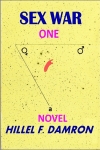
To give you a taste of the book, I’ve been posting segments of my award-winning short story, “The Monster,” which serves also as the basis for the book. Here then is the twentieth segment:

They crossed the valley. Z.Z., who had opened some distance between them, was running and skipping merrily, raising thin dusty clouds, heading as if magnetically toward the mountain and the rising sun. The enchanted D.L. was walking behind her, carrying her sack of belongings on his back. He stopped now and then to catch his breath, surveying the scenery ahead of him. Behind him, the colony hill and the Periscopic-Tower were disappearing slowly from sight. In one hand, deep in his large suit’s pocket, he felt the firm, cold touch of the radiation-gun. Once or twice he thought of using it to end Z.Z.’s life.
He didn’t, though; he didn’t know exactly why. Maybe it was due to the majestic scenery of the earth awakening to a new day, or because the fantastic light of the sun was hitting him head on, or maybe it was because of Z.Z. herself, and her absolutely carefree and joyous run toward the mountain and the sun. At that singular moment in time he was unable, and unwilling, to destroy the tranquility and beauty before him with such an act. He was in no hurry, he figured: the whole day was ahead of him.
Z.Z. didn’t stop her mad dash when she reached the mountain. She didn’t even look back to see where D.L. was. Not even once. She continued to run, as she had done since they left the colony, and was now climbing up the mountain slope. She fell here and there, but quickly rose up and continued her climb to the top. Or to the single rock that was looming near the top.
D.L. stayed behind at the bottom of the mountain. He lay down to rest at a spot where the sunlight was warming him up. He looked around but could not see any signs of growth: a flower, a bush or a tree. There were no signs, either, of any living things: insects, birds, or animals of any kind. Everything had been destroyed and was now extinct. He raised a handful of soil and allowed it to pour down smoothly and slowly between his gloved fingers. The falling soil, more like ash, left a trail of dust on the way down. Randomly, his fingers would catch a small clod, which he would then toss away in the air, or play with in his hand until it collapsed into pieces.
After some restful time he rose up, thinking that he may have fallen asleep. He looked up toward the summit of the mountain and saw Z.Z. there. She was sitting on the edge of that bulging rock, her knees raised and held together with her arms, while her head was resting on her laced hands. It was as if she were compressed into that stone, looking quietly at the scenery down in front of her. The sunbeams were hitting her directly; she was now, at last, part of nature.

Leave a comment

Filed under Culture, Literary, Sci-fi

Sex War One

SWOSex War One – my dystopian Sci-fi novel – is available for purchase in all eBooks & iBooks stores & devices. “Fast-moving plot and skillful characterization,” said the Science Fiction Studies journal. “This book unifies within it the principles of major Science-Fiction literature,” said This World. Kindle Edition & Smashwords Edition (for iTunes, Kobo, B&N & more.) For further details please check my books page.

To give you a taste of the book, I’ve been posting segments of my award-winning short story, “The Monster,” which serves also as the basis for the book. Here then is the fifteenth segment:

He again traveled on the constantly moving tracks, before taking the elevator down to the backyard level. Once there, he quickly entered Z.Z.’s shack. She was deep asleep, so peaceful and secure, the way she had slept when she was a child, before she was attacked and abused by the other kids. Only the innocents can sleep like that, the thought flashed in his head. He stood still by her side for a while, just looking at her, before touching her lightly with his hand. She woke up immediately and looked at him confused, as if unsure who he was. Then she got up, already alert, and approached him with the intention of hugging him.
It was an impulsive, natural act for her. She wasn’t used to his coming to visit her at such a strange time, dressed so unusually with this heavy-looking suit. It was as if he had come straight out of the dream from which she had awoken. No wonder she temporarily forgot what he had taught her about stretching her hand at him first. He stopped her approach, holding on to her shoulders with both hands. He held her like that, some distance away from him, looking at her intently for a moment before signaling her to sit down. She understood him and followed his order. She was frightened and hurt.
It occurred to him that maybe he should take pity on her. It was a “historic” word, pity, a word they had studied at school but no longer used. It represented a feeling, such as love and hate, which belonged to a different age: the Family Age. He thought about it only briefly, before quickly deciding to reverse course again.
He set his helmet down on the floor, signaled her to stay put, and hurried out of her shack. He went back to the yard and tunnels, and from there up to the main Control-Room. B.F. allowed him in without any questions, as if he were waiting for him. It took D.L. a moment to get used to the bright lights in the large room, a room full to capacity with computers and screens of all kinds, robots of all shapes and sizes, many cameras and a single colony-citizen, responsible for the smooth execution of all the colony’s operations.
D.L. asked B.F. to order the robot in charge of the Weapons-Cell to open it for him. Only one particular robot was authorized to open that cell, where a few radiation-guns and some more elaborate radiation-machine-guns were kept locked. Other than in that cell, there were no weapons in the colony. The colony-citizens had no use for weapons: they were kept there only for an emergency use, such as an attack from a different colony, from an alien planet, or for use in other such unexpected events. Even then, if possible, and time permitted, they were to be used only by direct orders from the Mother-Colony.
Not this time, though. D.L. explained to B.F. that he needed the gun for the purpose of exterminating the Monster. He needed no further explanations: B.F. supported N.R.’s position on the matter and was glad to see D.L. obeying the General-Assembly’s decision. He ordered Robot W.1, in plainspoken language, to open the Weapons-Cell and hand D.L. a radiation-gun. The robot insisted, speaking in kind, on receiving the correct code for such an unusual request. B.F., though agitated with the robot, consulted with a nearby computer screen and provided the code: a combination of letters, numbers, and symbols. Robot W.1, satisfied with the given code, proceeded mechanically and efficiently, using not only its arms but also electronic beam signals coming from its head, to execute the order.
D.L. checked the load level of radiation in the gun, as he had been trained to do in his youth, and found it to be satisfactory. He thanked Robot W.1 verbally, and also tapped on its head twice fondly, eliciting sounds and lights of joy from the robot. He then inserted the gun into a special, big pocket in his trip-suit.

Leave a comment

Filed under Culture, Destopian, Literary, Sci-fi

Phantom John (Final part)

jordanmfriedman.wp.com

jordanmfriedman.wp.com

Was it her father, who had saved her? No: it was the black soldier, touching her arm now ever so gently. It was morning already, and the time, he showed her on his wristwatch, was exactly 7:00. His shift, guarding her, was over. Though the rifle was still on his lap.
She shook her head when he asked her whether she wanted some coffee. As suddenly, time was important again. She was yet to fully comprehend why. But she was in a hurry, and needed to catch the train.
How did he know to wake her up on time, she couldn’t tell. But she returned the favor and gave up on the idea of the taxi, when he insisted on leading her to the station. As this part of town, he explained, was a dangerous place for a girl like her to be walking alone. Even the taxis were no good here, he said, hanging his rifle back on the wall. He then opened the door for her, and that when she noticed – was she still dreaming or what – a bullet hole in the door; which wasn’t there, she could swear, when she entered the room last night.

Outside, a new day greeted them with lucid blue skies. The rain had gone away, leaving everything in mint condition. And again, she pushed his wheelchair while he directed her and protected her all the way, a long way, to Union Station. Where he refused to go in with her: it was time for her to walk alone, and go home. And for him, it was mission accomplished. She was safe.
She hugged him and kissed him on his broken lips. And he held her hand long and strong.
“Be happy, child. Your father is alive.”
“How can you tell?”
“I’m an old dog in this game,” he cracked a smile. “And if anyone ever ask you how you know he’s alive, you just tell them because I told you so.”
“You told me so?”
“That’s right, my child. Phantom John told you so.”
And only after he’d said that, he released his hold on her hand and turned his wheelchair around. And rolled away from there so fast, he was gone in a second. Disappeared like a morning breeze. Like smoke in the air. A phantom.

Joy was left alone, gazing after him for a long, long time. Until finally, in spite of herself, she turned around and entered the station. And soon boarded a train that would take her back to Chicago, then Springfield. Back to face her mother – the mother who had lied to her. Lied to her because she was hiding something from her, Joy was certain of that. She was hiding the truth, maybe: a secret. A buried secret she was going to unearth, no matter what.

* A short story excerpt from my novel: Very Narrow Bridge.

Leave a comment

Filed under Culture, Literary

Phantom John (Part Two)

jordanmfriedman.wp.com

jordanmfriedman.wp.com

But she overcame her fear like the true warrior she sought to be, and approached the wall with a steadfast walk. And right away, among the crowd of strangers, she spotted the elderly couple from the train. They were standing still by one of the black panels, hugging each other, the head of the woman leaning on the shoulder of the man, his arm around her waist. United in grief.

A thought had crossed her mind in a flash: maybe, just maybe, they are his parents. Her grandparents. Why not? She would find out in a minute. So she hurried to join the few people waiting quietly in line beside a man, a Vietnam Vet, holding a thick book in his hands. She figured he could help her. And even though most of the people ahead of her, unlike her, were not by themselves, she didn’t feel lonely at all. Maybe because of the elderly couple, and maybe because of the folded piece of paper in her windbreaker’s pocket, which she now pulled out and unfolded. And read, not for the first time since she’d left her new home yesterday morning.

Read the name: Raymond De Rosi. And read the date of his death: February 11, 1969. And read the force: U.S. Marine Corps. It was written in her mother’s clear, round handwriting. The last thing Joy had asked her to do yesterday morning, before Ursula rushed out with Trent, taking him to school and then ahead for her first day back at work. She didn’t tell her mother why she needed her to write it down, despite her mother’s protests.

It was a secret, her own little secret, now within reach. Maybe that’s why she didn’t mind waiting in line, and didn’t mind the dark clouds, either. It seemed appropriate, the way the clouds encircled the black wall, making it less distinguishable, but at the same time, strangely enough, more prominent.

Even the white piece of paper in her hand was covered with a layer of gray, she noticed when she handed it over to the Vietnam Vet, who was wearing his army uniform, colorfully decorated with medals and stuff. He smiled at her, then flipped quickly through the pages of the thick book, full to capacity with names.

The process, she’d observed before, was rather fast and problems free. Not this time, though. The first sign that something might be wrong came when the Vietnam Vet halted his search and raised his eyes at her. Suspiciously, she thought. Or maybe it was all in her head, as right away he directed his eyes back to his book-of-names and continued his search.

Until he stopped altogether and handed her back the piece of paper. “Sorry, ma’am,” he said with a heavy Southern accent, “he’s not listed.”
“What d’you mean, not listed?” she almost shouted, refusing to take her note back.
“His name’s not on the wall,” he answered patiently.

Her heart skipped a beat. The color of her face, most probably, had changed dramatically. Because he looked at her more concerned now, when he asked: “Are you sure, ma’am, about the spelling of his name?”
She nodded.
“Do you know anything else about his tour of duty, by any chance?”
“He was a marine. That’s all I know.”
“Good enough,” he said unimpressed, and handed her back the piece of paper. “Go up to the information booth over there,” he pointed the way. “They might be able to help you better.”

* A short story excerpt from my novel: Very Narrow Bridge.
To be continued next month on the 15th.

Leave a comment

Filed under Culture, Literary

Meet Me in Baghdad at Sundown (Part 2)

dolan-air.com

dolan-air.com

Akef takes a good, long drag on his cigarette, now at 8 minutes before the expected, dreaded phone call. He then tastes for the first time the black Turkish cof­fee in front of him. Layla had prepared it for him, so considerate suddenly, after the much trouble and crying she had inflicted on him lately. But the taste of her coffee is still good, and unlike her, warm and strong. And she is right, he is forced to admit, she always was her father’s favorite daughter: the olive of his eye. And she knows him best, too. To her, she had said, he never lies. Nor ever will. All is forgiven, then, and the letter of remorse and unconditional surrender is accepted without conditions. Even her father – who danced merrily after so many funerals, those of his enemies and those of his friends, and who drank their blood as if it were but sweet wine – even he wouldn’t hurt his own daughter, his own flesh and blood, and his own grandchildren and their father. After all, he and Akef have been through so much together, at war and at peace. And if not for his snake-eating son, the cold-blooded murderer who would readily, if the opportunity were to present itself, kill his own father without a second thought, this whole sad affair – their defection to Jordan – would never have happened. As the son, Akef is sure of this, was the one to convince his father to get rid of him.

But now, Layla promised him, her father himself is losing all trust in his son and his days are numbered. She spoke with him by phone and got all the right assurances. As a matter of fact, her father had said, Akef is needed now more than ever before. His “baby” – the biological-bomb-for-mass-annihilation – is in deep troubles. Only Akef, by taking charge again of these mad scientists, can resurrect it now. At the same time, the damn Kurds are gaining ground again, up north. And who else if not her husband, so he had told her, would be able to suppress and eradicate them once and for all. And after that – Jerusalem!

And suddenly, at 7 minutes to midnight, for the first time in these long 6 months of exile that Akef feels at peace with himself. He is almost happy it is all going to end pretty soon. Even the splitting headache that follows him everywhere and the deafening whistle in the core of his brain have mysteriously disappeared. He won’t be in need­ anymore of those amateurs who call themselves doctors, over there at the Royal Hospital of Amman. Oh no, he is confident again; he is ready for action; he is resolute once more. Most probably he will be able to sleep tonight, after the telephone conversation, for the first time in a long time. He won’t be surprised, even, if his wife will join him in bed. And just as he is thinking about that he feels – no, he is not dreaming – an erection coming on. It is a sign of life he hasn’t felt since leaving Baghdad. And it feels so good, oh Muhammad son of Allah, so normal again – even if, after the short moment of elation, it quickly wilts down.

He sucks on the cigarette as hard as he can when only 6 min­utes remain, then releases the rings of smoke as slow as possible. He promised in his agreement letter to reveal all the contacts he had made here in Amman, name all the names of the people he had met, and disclose all the places he had visited. He swore to reveal where they hide, all these traitors who call themselves patriots, the “sav­iors of the homeland.” They had called him a “war criminal” to his face, his hands still dripping blood of comrades, they had said. He will show them a pool of blood, an ocean in fact. They refused to name him their leader, refused to crown him the next king. Work with us, they had told him, here in the marketplace of the old city, here in the darkness of the narrow alleyways. Be one of us: a foot soldier. Then we shall see. But he wasn’t ready for that: then, now, or ever. He wasn’t, still isn’t, a foot sol­dier. He is a general! He will personally command the unit of brave men that will penetrate their ranks and kill them all. In one swift move. The same way he had used to cut wheat with his scythe, back at the village of his lost childhood and youth.

Leave a comment

Filed under Culture, Literary

An Unexpected Treasure

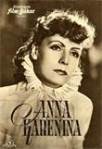
G.G. as Anna Karenina

Watching the latest version of Anna Karenina on the big screen lately took me back to – of all places – the kibbutz where I was born. How could it be, you may ask. Well, here’s how: At the end of summer a couple of years ago, while a last heat wave was sweeping the Sacramento Valley, my yearlong love affair with Anna Karenina had come to a sudden end as well. I had spent almost a year huddled with her on my lap, and when she jumped down to her tragic end, she had left me behind sad and lonely, yet so much richer and complete. I knew her ending from the beginning, of course, but I had no way of knowing that my journey with her would lead me back to my birthplace, a kibbutz in northern Israel, and to the discovery of a completely unexpected treasure.

It took a while, though, because that’s how I love to read: slow and easy. And because I could never understand why book-reviewers, especially here in America, always gave the biggest compliment to a new novel by saying it was a real “page-turner.” Not my cup of tea. With that in mind, I grabbed a copy of a newly translated edition of Leo Tolstoy’s novel from my bookshelf, determined to finally give the eight-hundred-plus-page classic its due. I hesitated to take this plunge, among other reasons, because I’m a Dostoyevsky fanatic. It was his novels, with their gripping plots and possessed characters, that had accompanied and guided me when I left my kibbutz and moved to the city of Tel Aviv. I tried Tolstoy once or twice, but it never affected me the same way.

But with Anna Karenina so many years later, slow reading became the name of the game. I would read just a few pages sometimes, but most often a chapter or two. On occasions, I would go back to a previous scene and reread it, just as I did with the one where Anna is being torn apart from her beloved son, knowing very well that she would never see him again; the horrible shadow of her tragic end hovering above her, waiting patiently to carry her to her last station.

And talking about last stations, halfway through the book I took a break from reading one rainy Sunday and went to see the movie by that same name: The Last Station, about Tolstoy and his wife Sophia in their later years. I was struck by Sophia’s words when, on a most beautiful horse-drawn carriage ride, she tells Tolstoy’s young secretary that the most ardent followers of her husband don’t understand his writing: “He writes about love and family, not about the Russian People and their social and political system.”

Humbly, I beg to differ. And by doing so, I return also to the hidden treasure I alluded to at the beginning. Sophia was only partly right: the horses in front of her were, indeed, Anna and her lover Count Vronsky. But the carriage she was riding in was carrying the story of her husband and herself, Levin and Kitty, and by and large the more important story: that of the Russian people. Kostya Levin (Leo Tolstoy himself, no doubt) was writing about changing the Russian class system, the injustice treatment of the peasants, his agricultural experiments, and last but not least, his wish to give all his wealth and land away to a working-class commune.

How amazing it was for me to discover the origin of the place where I was born and grew up in, hidden in the pages of Anna Karenina. It was Tolstoy then, who had first put the foundation to the idea that years later would create the Israeli kibbutz. That small place, which the scent of the sweet peas blooming in my balcony at spring reminded me of so much, was founded as a commune of people working the land—poets, writers and musicians among them; great dreamers all of them—where there wasn’t even money to be found as I was growing up.

Looking back, it was a place only a Russian Novel can accurately depict. And so I praise slow reading, it enables one to discover certain truths; a fit no page-turner, no Kindle device would ever be able to accomplish. It is entirely possible that because of my slow reading, because I read carefully and didn’t rush to reach the end, that I was able to discover this great secret: It was not Karl Marx, not Lenin or Trotsky who gave birth to the paradise that was the place of my childhood and youth. It was Tolstoy.

* Appeared first on The Times of Israel

Leave a comment

Filed under Culture, Literary