Tag Archives: Israel

The Absurd Regions

As promised in last month’s post, here are four more vignettes—published for the first time here in my literary website—that were originally published years ago in Hebrew, on the pages of ‘Iton77;’ the literary, cultural Israeli magazine. Next month, I will revisit this reportage, which was titled back then ‘The Absurd Regions,’ and publish more of its lyrical impressions, which I wrote during the First Lebanon War of 1982-85. So stay tune, and here goes:

Yoel The Handsome

Dead. Was killed in an accident on a treacherous road in one of Lebanon’s regions. A meaningless Lebanese accident—just like that. Those demonstrating in front of the prime minister’s home can add his name to the list of the fallen. We spent six months, the entire army’s ‘Combat Officers Course’ together. He was the handsomest among us. In his kibbutz, Ayelet HaShahar (Morning Star) he left behind four orphaned children and a pregnant wife. They, too, are among the casualties of this useless war.

The “Status of the Logos”

On our daily patrol we pass by the spot where three soldiers from the reserved battalion, the one that preceded us on duty here, were killed. One short burst of gunfire slaughtered them all. Luckily, we are still alive. For how long, though, it’s hard to say.
Back at our base, from the radio blaring in our kitchen tent, comes the voice of a scholarly literary critic, talking about the “Status of the Logos,” about the “Sacredness of Art,” and of its “Esthetic Beauty.” It sounds as if the voice comes from a faraway country, whose residents are unaware of what their sons are up to here. “Dust to his feet we are,” so says the critic in regard to the poet he is talking about. And so are we, in regard to our country, our elders. So we climb on our armored vehicles. Load our guns. And off we go.

A Hand for Peace

The local population, so the papers back home had told their readers, received the Israeli soldiers with cherries, flowers, and kisses in the air. The other side of the story is a lot less celebratory, and a lot more depressing. We don’t even receive smiles anymore. Only the kids, inexperienced in war and in politics, sometimes raise a hesitating hand for a wave as we pass on the road. They stand on the roads’ shoulders, littered with burned armored vehicles. Above them, swarms of bloodsucking mosquitos constantly hover.

A Dog Burial

A puppy was killed on the road. For the whole day he was lying dead on the roadside, and was beginning to stink. At the end, we were the ones to bury him. After a short hour, his mother found his burial place. She burrowed and excavated her dead puppy, exposing him again to the rays of the sun and the eyes of the world.
The other day, one of our soldiers committed suicide in a checkpoint. Those who knew him claimed he brought his troubles from home. Another soldier was sent to the “soul-health’s officer.” Those in the know said he brought his “mantel-sickness” from home. Last night, a soldier from the Border Brigade was killed in an ambush. Those who knew him said he loved the army more than he loved his home. His funeral service and burial obeyed the required Army protocol.
Leave a comment

Filed under Culture, Literary

The Absurd Regions

I’m publishing here—for the first time in my literary website—four short vignettes (out of twelve) that were published years ago in Hebrew at ‘Iton77;’ the literary, cultural Israeli magazine. Next month, I will revisit this reportage, which was titled then, ‘The Absurd Regions,’ and publish more of its lyrical impressions, which I wrote during the First Lebanon War of 1982-85. So stay tune, and here goes:

First Gathering
No smiles on the rough faces. The regular questions: How things? How’s life? The answers are heavy, occasionally harsh: shit, life’s in the dumpster. Ninety percent of our battalion’s command personnel identify with the ‘Peace Now’ movement. Objecting to the war. Objecting to the stay in Lebanon. Detesting what’s require of them to do next. One of the officers demonstrated yesterday in front of the Prime Minister’s house in Jerusalem. Before that, he marched from Rosh HaNikra up north to Tel Aviv. His wife advised him not to come this time. Refuse to go. But he is here—of course he is. Maybe because his friends are here. Who is he that he will allow them to be fucked with this shitty job without him. Maybe for the sake of democracy he came. The democracy Sharon and Raful crushed when they started this war. It’s been proven already before that there are more important things than this war: you, me, son, daughter. Life.

Traveling
The visions passing by us reflect a mixture of the bizarre and the absurd. Beautiful countryside, on the one hand: the small villages are cuddled by the rolling hills, while the mountains merge so nicely with the scenery and don’t bite at it, like some of our mountains do back home. On the other hand, dirt and filth everywhere. Ecology is a nonexistent word in the local jargon. Here, one does as one pleases.
It’s harvest time now. The small fields in the bottom of the hills are harvested using sickles, and the sheaves are gathered by hands. An old combine then sorts the wheat grains apart and fill the air with golden dust, fog like. Peaceful cows are grazing in the meadows. The shoulders in the narrow roads are littered with potholes. And with old cars, scattered about here and there. One of them, you know that, is a death trap waiting for you.

Lawless Country
In Lebanon there are no taxes; no licenses; no one pays for electricity. Teenagers drive the cars on the roads. Kids drive the tractors, with dark covered women walking beside them, majestically balancing sacks of wheat grains and tobacco leaves on their heads. New, shiny vehicles zoom by, passing by old ones whose guts are exposed.
Muslims, Christians, Druzes, Shiites and Khomeini supporters coexist in this country side by side. Mixed multitude. And there are, of course, the Christian Militia and the Chadad Falangists. The latter are the road-robbers of this country. They reside under the shade of the Israeli Army’s camps and wear its uniform. “Tell me who your friend is, and I will tell you who you are.” So say the soldiers here, who play bad cops in this grotesque drama.
The circle is rounded and closed with the UN soldiers from Holland, France, Senegal, Ireland… you name it. Some are friendly to us; some hate our guts and look down on us. A black soldier wearing blue uniform and brown overcoat stands in attention in a remote, forgotten ravine. His rifle is erect in his arms. No enemy in sight, though. He belongs, like all of us, to a different world.

The Village Women
Before sunrise the women of the village go out into the small tobacco fields that close in on their houses. They pluck the green leaves and put them in their brown sacks. After that, in full morning light, they carry the sacks on their heads to the houses. There, with their children, they sort the leaves and hang them on thin ropes to dry them up in the hot sun. Later still, they will milk the cows, lead them out into the field to graze, feed the children and clean the houses. They shoulder their responsibilities with primeval dedication.
The husbands, meanwhile, will enter their Mercedeses late in the morning, and will drive to town to attend to their businesses. Maybe visit the coffee house in a nearby village. Play backgammon there with friends and smoke the narghile. In the evening they will return home and receive from their dutiful wives what they’re owed: food, love, and respect. The Bible, in certain terms, is alive and well here.

Leave a comment

Filed under Culture, Literary

News Flash—Old and New!

In February of 2012 I was fortunate enough to be declared the winner of “Moment Magazine Memoir Contest,” awarded for my short story entry titled, “The Sweet Life.” The award ceremony was held at the Spertus Institute in Chicago, with participation of Moment Magazine’s editor and publisher, Nadine Epstein, and the author Shalom Auslander, who was the contest judge.

Only a few weeks ago, totally by chance, I discovered that a radio station in Chicago, WBEZ 95.1 (NPR Affiliated) had broadcasted the award ceremony and reading that came with it. And so, if you have some minutes to spare—and you really want, rather need to get away from the depressing news of these days—take a listen, in particular as I read from my award-wining short story.

Here’s the link to the radio broadcast

Leave a comment

Filed under Culture, Literary

An Unexpected Treasure

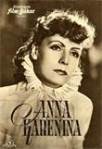
G.G. as Anna Karenina

Watching the latest version of Anna Karenina on the big screen lately took me back to – of all places – the kibbutz where I was born. How could it be, you may ask. Well, here’s how: At the end of summer a couple of years ago, while a last heat wave was sweeping the Sacramento Valley, my yearlong love affair with Anna Karenina had come to a sudden end as well. I had spent almost a year huddled with her on my lap, and when she jumped down to her tragic end, she had left me behind sad and lonely, yet so much richer and complete. I knew her ending from the beginning, of course, but I had no way of knowing that my journey with her would lead me back to my birthplace, a kibbutz in northern Israel, and to the discovery of a completely unexpected treasure.

It took a while, though, because that’s how I love to read: slow and easy. And because I could never understand why book-reviewers, especially here in America, always gave the biggest compliment to a new novel by saying it was a real “page-turner.” Not my cup of tea. With that in mind, I grabbed a copy of a newly translated edition of Leo Tolstoy’s novel from my bookshelf, determined to finally give the eight-hundred-plus-page classic its due. I hesitated to take this plunge, among other reasons, because I’m a Dostoyevsky fanatic. It was his novels, with their gripping plots and possessed characters, that had accompanied and guided me when I left my kibbutz and moved to the city of Tel Aviv. I tried Tolstoy once or twice, but it never affected me the same way.

But with Anna Karenina so many years later, slow reading became the name of the game. I would read just a few pages sometimes, but most often a chapter or two. On occasions, I would go back to a previous scene and reread it, just as I did with the one where Anna is being torn apart from her beloved son, knowing very well that she would never see him again; the horrible shadow of her tragic end hovering above her, waiting patiently to carry her to her last station.

And talking about last stations, halfway through the book I took a break from reading one rainy Sunday and went to see the movie by that same name: The Last Station, about Tolstoy and his wife Sophia in their later years. I was struck by Sophia’s words when, on a most beautiful horse-drawn carriage ride, she tells Tolstoy’s young secretary that the most ardent followers of her husband don’t understand his writing: “He writes about love and family, not about the Russian People and their social and political system.”

Humbly, I beg to differ. And by doing so, I return also to the hidden treasure I alluded to at the beginning. Sophia was only partly right: the horses in front of her were, indeed, Anna and her lover Count Vronsky. But the carriage she was riding in was carrying the story of her husband and herself, Levin and Kitty, and by and large the more important story: that of the Russian people. Kostya Levin (Leo Tolstoy himself, no doubt) was writing about changing the Russian class system, the injustice treatment of the peasants, his agricultural experiments, and last but not least, his wish to give all his wealth and land away to a working-class commune.

How amazing it was for me to discover the origin of the place where I was born and grew up in, hidden in the pages of Anna Karenina. It was Tolstoy then, who had first put the foundation to the idea that years later would create the Israeli kibbutz. That small place, which the scent of the sweet peas blooming in my balcony at spring reminded me of so much, was founded as a commune of people working the land—poets, writers and musicians among them; great dreamers all of them—where there wasn’t even money to be found as I was growing up.

Looking back, it was a place only a Russian Novel can accurately depict. And so I praise slow reading, it enables one to discover certain truths; a fit no page-turner, no Kindle device would ever be able to accomplish. It is entirely possible that because of my slow reading, because I read carefully and didn’t rush to reach the end, that I was able to discover this great secret: It was not Karl Marx, not Lenin or Trotsky who gave birth to the paradise that was the place of my childhood and youth. It was Tolstoy.

* Appeared first on The Times of Israel

Leave a comment

Filed under Culture, Literary